

Software consultancy: choosing tech you won't regret
Software is expensive to undo. Pick the wrong system and you pay for it twice: once to buy or build it, and again to move off it. Our software consultancy work happens before that money is spent. We look at how your business runs, compare the options and tell you whether to buy, build or combine the two, including when off-the-shelf software is the better answer.
We're a software, DevOps and AWS team in Auckland, so the advice comes from people who build and run systems every day. If you'd like us to build what we recommend, we can. If you'd rather hand the plan to another team, we're happy to do that too.
What a software consultancy engagement looks like
Depending on the size of the job and how your team works, an engagement takes from a few days to a few weeks.
- We talk to the people who will use the system and look at how the work gets done now, including the spreadsheets and workarounds that hold it together.
- We review the systems you already run, and any quotes or proposals you've had from vendors or other developers.
- We compare the realistic options: an off-the-shelf product, an off-the-shelf product with custom integrations, or a custom build, with what each costs to set up and to keep running.
- You get our recommendation and a plan you can act on, with us or with someone else.
Build or buy: how we decide
| Option | When it fits | Example |
|---|---|---|
| Off-the-shelf | The system has to meet a compliance standard, or a product already does the job well | Taking card payments through a provider that already meets PCI DSS |
| Off-the-shelf with custom integrations | A product covers the core job, but your business needs it to do more | A community site on XenForo with custom integrations and modifications |
| Custom build | Nothing on the market fits, or the software has to work with your own hardware or process | An Android app and sign software for a digital road sign |
When off-the-shelf is the right answer
If a system has to meet a compliance standard, buy a product that already meets it. Building your own means proving compliance yourself, and keeping it proven every time the software changes. Taking card payments is the obvious case: a payment provider that already complies with PCI DSS carries most of that work for you.
When a custom build is the answer
For a digital road sign, the software had to read the vehicle speed from the sign's radar and change the message on the sign, and staff needed an Android app to set it up. No product does that, so we built both.
The middle option: off-the-shelf with custom integrations
For one community site, XenForo, an off-the-shelf forum platform, did the core job. We set it up and then built a lot of custom integrations and modifications on top. The community got a proven forum without anyone building one from scratch.
Simple software is now worth building
AI coding tools have changed the maths for simple, well-understood software. A ticketing system is a good example. Everyone knows how one works, and the hard part is fitting it to your business, not inventing it.
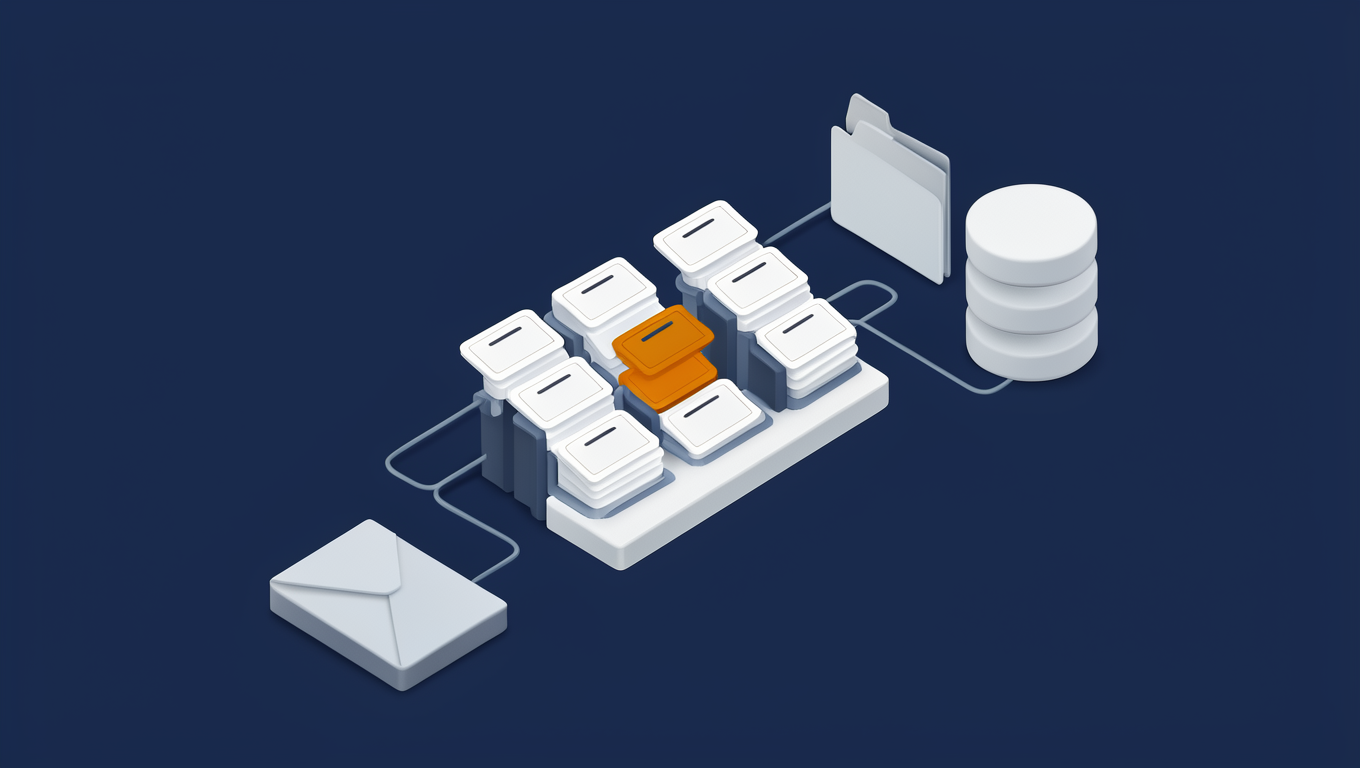
Instead of paying per agent for an off-the-shelf help desk such as Zendesk and bending your process to fit it, we use AI tools to build a ticketing system designed around how your team works and connected to the rest of your software. That's where custom software now makes sense for jobs it used to be too expensive for. It applies to simple systems. For anything complex or regulated, the advice above still stands.
IT consulting in NZ, not just software
Software decisions sit on top of other decisions: where it runs, how it's secured and how it connects to the tools your staff already use. Our IT consulting covers those as well:
- hosting in the cloud, on AWS through our DevOps service, or on-site on your own servers
- security
- office networks
- Microsoft 365
- where AI fits, which our AI consulting service covers in more depth
A second opinion on a quote or a system
If you've already had a quote from a vendor or another developer, or you've inherited a system and aren't sure what you've got, we'll review it and tell you what we'd keep, change or question.
Counting the full cost
The purchase price or the build quote is only the start. Before you choose, count:
- setup, including moving your data across
- licences or subscriptions, especially anything charged per user as you grow
- hosting
- maintenance and updates
- training your staff
- what it would cost to move off it later
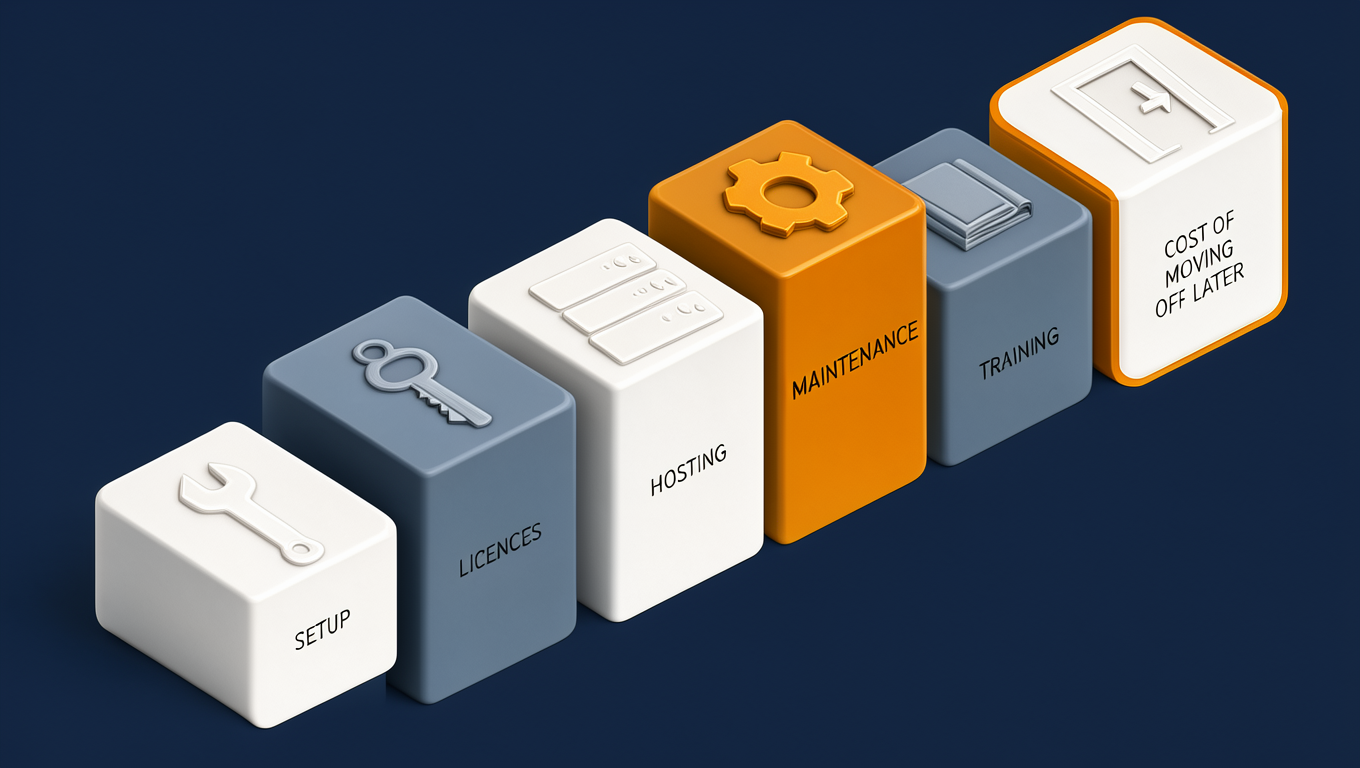
A cheaper subscription can cost more over three years than a build that fits, and sometimes the reverse is true. That's why we compare both.
Software consultancy questions we get asked
How long does a consultancy engagement take?
From a few days to a few weeks, depending on the size of the job and how your team works.
Do we have to use you to build what you recommend?
No. If you'd like us to build it, we can. If you'd rather hand the plan to another team, we're happy to do that.
Will you recommend off-the-shelf software if it fits better?
Yes. When a system has to meet a compliance standard, we'll usually tell you to buy a product that already meets it rather than build your own.
Can you review a quote from another developer?
Yes. We review quotes and proposals from vendors and other developers, as well as systems you already run.
Do you only advise on software?
No. We also advise on hosting in the cloud or on-site, AWS, security, office networks and Microsoft 365.
Is it worth building a ticketing system instead of buying one?
For a simple one, we think it usually is now. AI coding tools make a well-understood system like a ticketing system quicker to build, and you get one designed around how your team works instead of paying per agent for a help desk built for everyone.